
The Government announced the latest £1.5b funding package as part of its ambition to “restore national pride”.

“This funding will keep the doors open and the lights on at thousands of arts organisations, museums, libraries and heritage buildings that might otherwise have been at real risk of closing,” Culture Secretary Lisa Nandy said.
“That is the Britain we are rebuilding.”
Yet, eight months after that announcement, and with Andy Burnham, the former Mayor of Greater Manchester, now serving as Prime Minister, questions remain over whether that national ambition will translate into tangible action for the region’s endangered heritage.
What is Heritage at Risk and why does it matter?
Every year, Historic England publishes its Heritage at Risk Register, a national assessment of the country’s most vulnerable historic places.
It identifies listed buildings, conservation areas and places of worship whose future is threatened by neglect, decay, inappropriate development or other pressures.
On Friday, August 7, it announced the upgrading of a the Roman Catholic Church of St Oswald & St Edmund Arrowsmith in Ashton in Makerfield from Grade II to Grade II* in recognition of its nationally important Harry Clarke stained-glass windows, highlighting the continuing work to identify and protect England’s architectural heritage.
The register thus forms a vital database to help direct funding, inform planning decisions and encourage owners, local authorities and communities to work together towards sustainable solutions.
Historic England says the register is about more than preserving old buildings:
“People regularly say how much the historic character of where they live, work and play contributes to their lives.”
Conversely, when historic buildings fall into disrepair, communities can experience a wider sense of decline.
Historic England’s Chairman, Lord Mendoza, described the Government’s investment as an acknowledgement of the role heritage plays in modern society.
“We have just unveiled firm evidence that historic places are vital for our mental wellbeing and people feel profound emotional connections with them.”
Greater Manchester’s heritage under pressure
Across Greater Manchester, several Grade I and Grade II* listed buildings remain in Priority Category A, Historic England’s highest risk classification. It means they face rapid deterioration or potential loss without urgent intervention.
Among the newest additions to this year’s register are St Wilfrid’s Church in Standish and Hall i’ th’ Wood Museum in Bolton. Both Grade I listed sites, recognised for their exceptional historic significance, are now facing uncertain futures.
Hall i’ th’ Wood: From restoration success to fresh uncertainty
Dating from the early 16th century, the Grade I listed Tudor manor is best known as the home of inventor Samuel Crompton, who developed the revolutionary Spinning Mule there in 1779. After falling into disrepair during the Victorian era, the building was rescued by philanthropist Lord Leverhulme and gifted to the people of Bolton, becoming a museum celebrating both local history and Britain’s textile heritage.
For more than a century, Hall i’ th’ Wood has been regarded as one of Greater Manchester’s heritage success stories.
Today, however, that success story faces a new challenge.
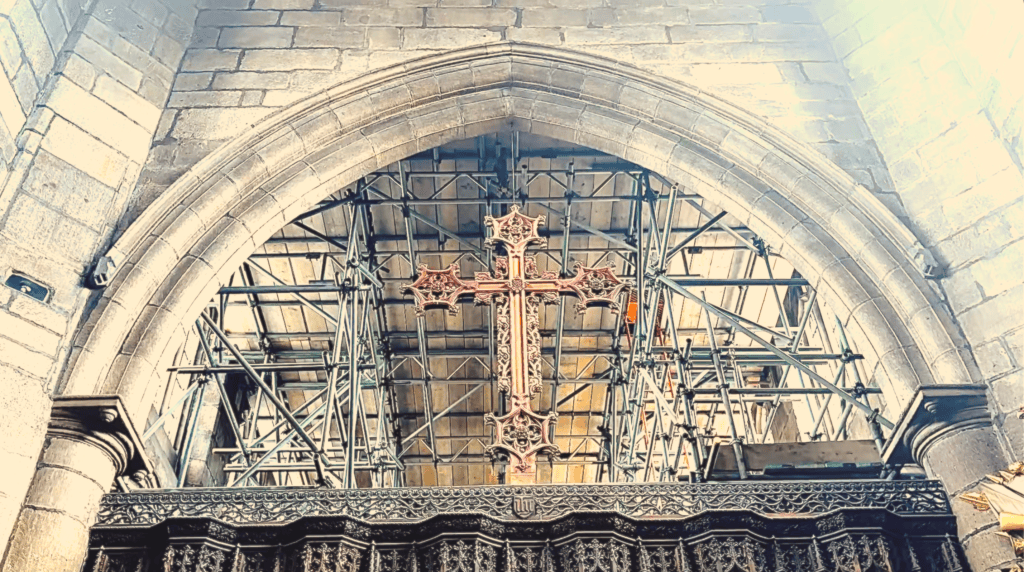
The museum has closed to visitors after structural problems resulted in its inclusion on Historic England’s Heritage at Risk Register. Its collections have been removed while conservation specialists assess the building and develop proposals for its repair.
Matthew Watson, Museum Access Officer at Bolton Museum, said specialists are working alongside Historic England to determine the extent of the structural issues and the investment needed to restore the building.
“We are also working with Be One Homes on a community engagement programme which will support a funding application to the National Lottery Heritage Fund.”
He said the programme is expected to begin in 2027, marking the bicentenary of Samuel Crompton’s death.
For Peter Firth MBE, Live from Worktown CIC Director and local resident, the biggest obstacle is funding.
But, in spite of the challenges, he remains hopeful: “It will open, will just take a while.
Four buildings. Four different challenges
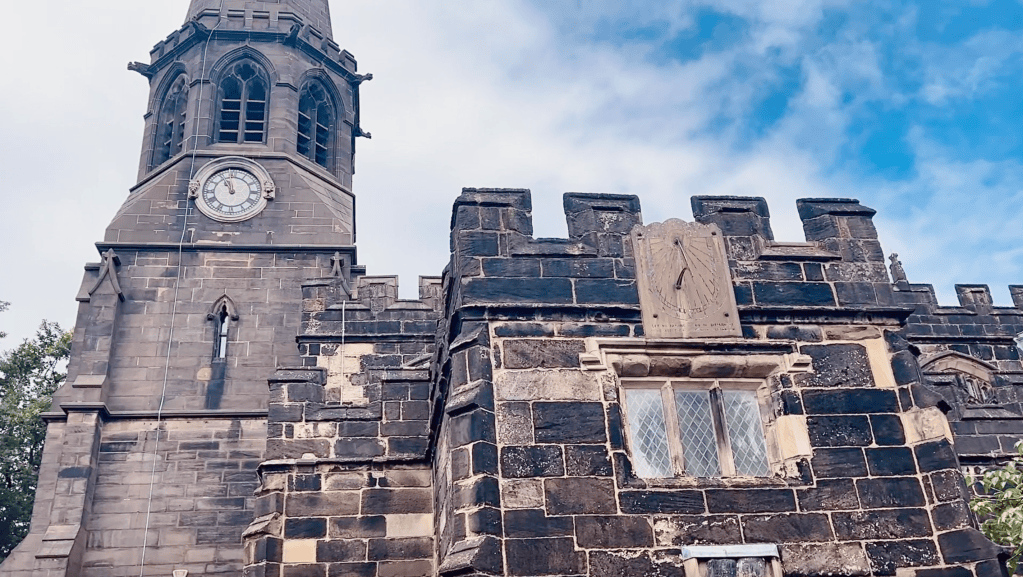
St Wilfrid’s Church, Standish
The only Grade I listed building in the Borough of Wigan, St Wilfrid’s Church has served the community for more than 800 years. Noted for its remarkable Elizabethan timber ceiling and rare architectural features, the church recently completed a £500,000 restoration of its landmark spire. Yet just months later, a severe deathwatch beetle infestation affecting the ancient roof timbers led to its inclusion on Historic England’s Heritage at Risk Register.
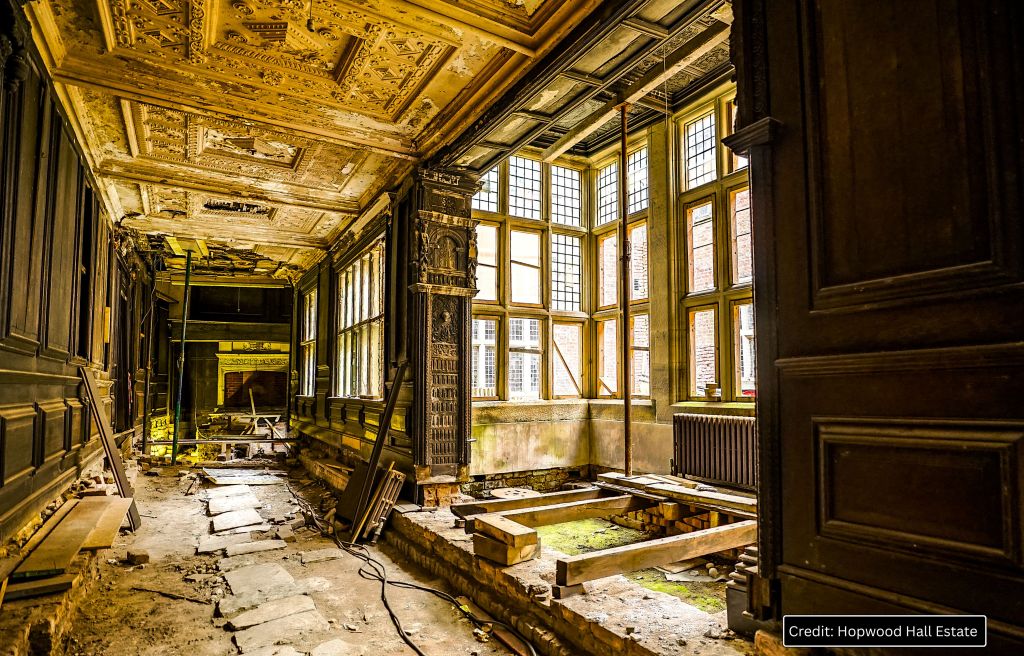
Hopwood Hall, Middleton
Built in the 15th century, the Grade II* listed Hopwood Hall spent decades abandoned before becoming the focus of an ambitious restoration led by Hopwood DePree, a descendant of the founding family.
After years of stabilisation work and community involvement, the project has stalled following a legal dispute with Rochdale Borough Council over the future management of the estate. The case is now awaiting a High Court decision.
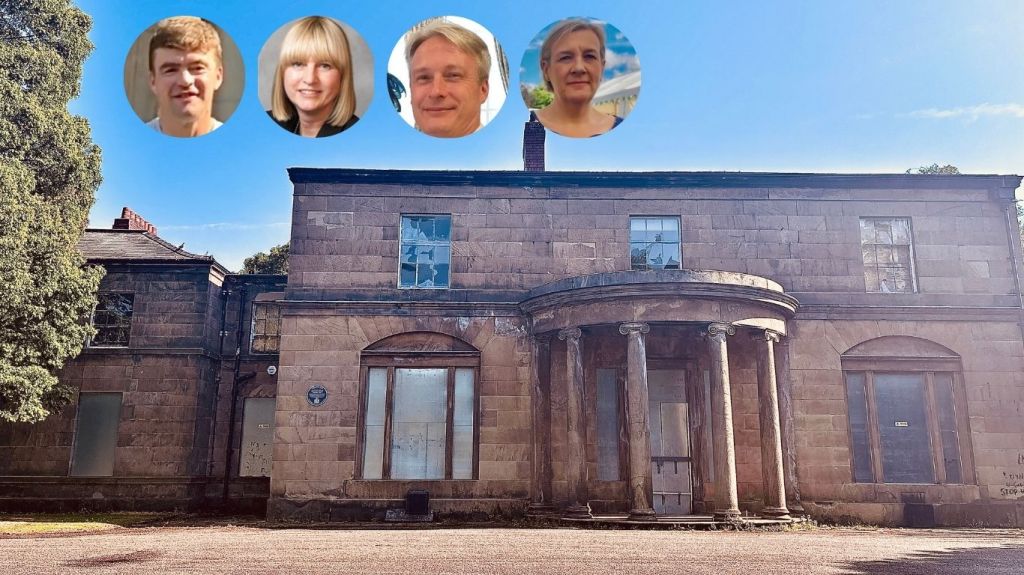
Woodbank Memorial Hall, Stockport
Designed by Thomas Harrison in 1814, Woodbank Hall is one of Stockport’s finest surviving Greek Revival houses. Years of water damage and structural decay have left the Grade II* mansion on Historic England’s Heritage at Risk Register. Although Stockport Council has invested more than £250,000 in emergency stabilisation works, campaigners say a long-term strategy is still needed to secure its future.
Photo: The Manchester Edge
Winstanley Hall, Wigan
Dating back to around 1573, the Grade II* listed Tudor manor has become one of Greater Manchester’s most controversial heritage debates.
Developers propose restoring the hall by converting it into homes, funded through the construction of almost 400 houses on neighbouring Green Belt land.
Supporters describe it as the building’s last realistic chance of survival, while opponents argue the environmental cost is too high.
Heritage as an investment in place
Saving historic buildings is often considered an expensive obligation for councils and public bodies. However, it should be perceived differently, according to experts.
“Heritage is not a cost we carry from the past – it is capital that is still working for us today.
Ian Morrison, Director of Policy and Evidence at Historic England
“Historic buildings make places more distinctive, more attractive and more productive. They are not just part of our past – they are part of how communities grow and thrive,” Morrison added.
Across Greater Manchester, however, the future of many nationally significant buildings is still uncertain. Some are awaiting funding; others depend on complex planning decisions or legal disputes.
Trouble is that historic buildings do not wait for committee meetings, funding rounds or court judgments. While decisions are debated, weather, water and neglect continue their ravages, making some of Greater Manchester’s most important landmarks deteriorate faster than solutions can be found.



Leave a comment