
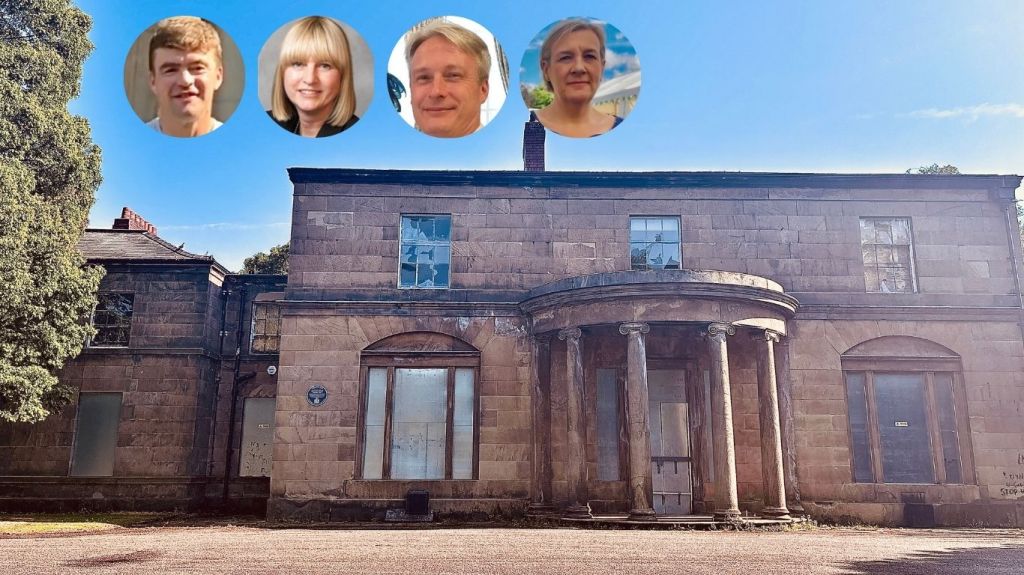
Hidden behind dense woodland off Pemberton Road, Winstanley Hall has stood empty for decades.
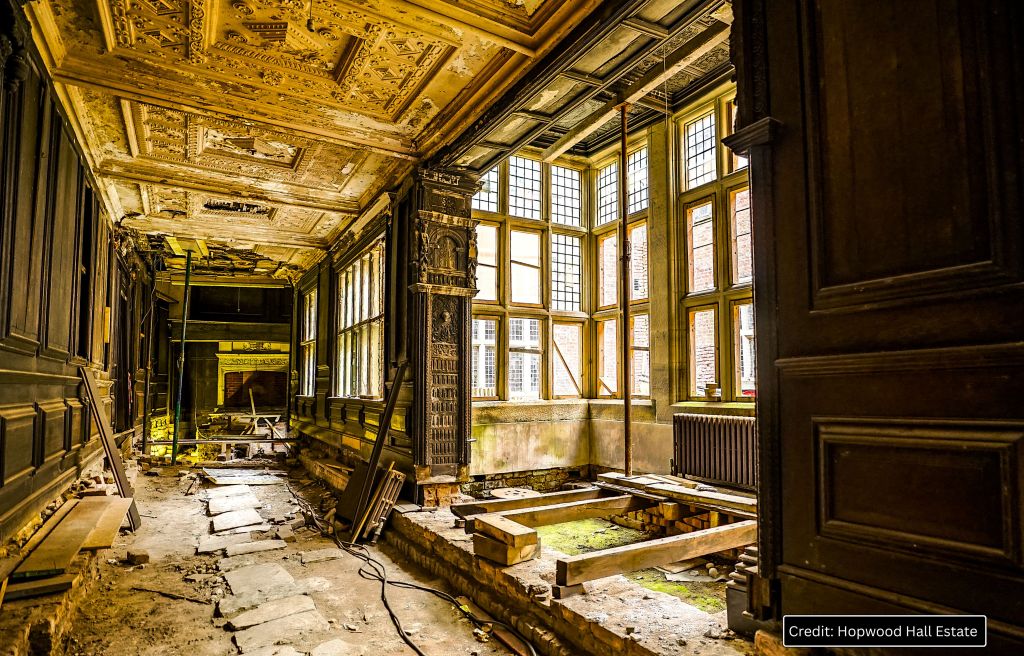
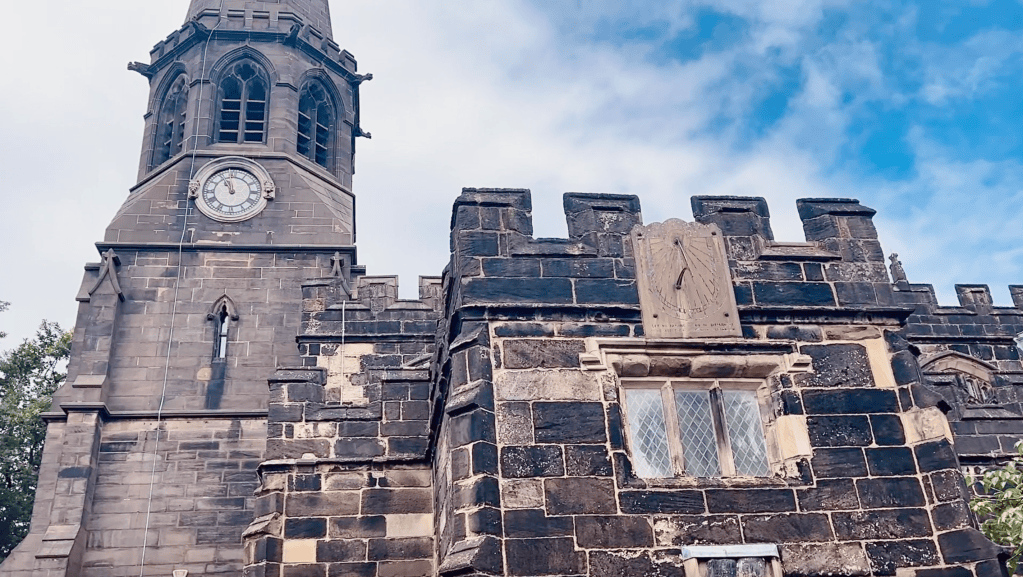
Built around 1573 by the Winstanley family and remodelled in the 19th century by architect Lewis Wyatt, the Grade II* listed manor is one of only three surviving Tudor buildings in the Borough of Wigan. Historic England describes its condition as “Very Bad”, with High vulnerability and Priority A status, meaning it is at immediate risk of further rapid deterioration with no agreed solution.
The Hall has been unoccupied since the 1980s and has been vacant for more than 25 years.
Winstanley Hall, 2006.
Picture by Andy Gibson, CC BY-SA 2.0, Creative Commons
The mansion was bought by Kingswood Homes in 2025, while the wider estate remains in the ownership of Tim Bankes, a descendant of the Bankes family.
Today, its future rests on a controversial planning proposal before Wigan Council.
Kingswood Homes argues that building 396 homes on neighbouring Green Belt land is the only viable way to restore the Hall through an enabling development.
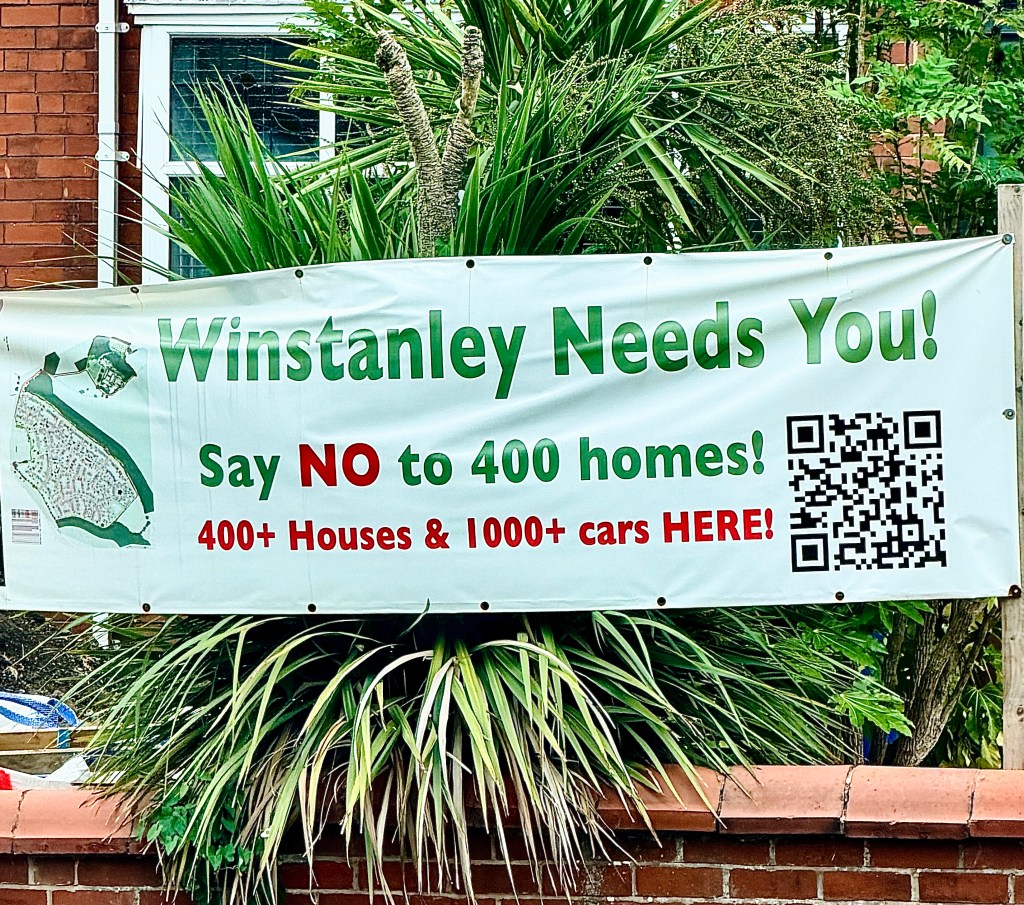
Syd Cottle, a 50-year-old Winstanley resident and active member of Save Winstanley Green Belt, says the community has supported housing growth in the area for decades.
“But this one is different, for several factors,” he insists.
Restoration or reconstruction?
“Kingswood Homes owns this building, yet they haven’t spent a penny to stop it from deteriorating.
“Now they are proposing that they will only invest in the Hall if they get planning permission. That isn’t a fair offer; it feels like blackmail. The community takes all the hit while getting zero benefit,” Syd said.
Kingswood Homes strongly rejects that characterisation.
“Our enabling development masterplan is a bold, visionary strategy that leverages new housing to fully fund and breathe fresh life into the Hall,” a spokesperson said.
“Our commitment goes far beyond just saving a structure. We are transforming Winstanley Hall into a vibrant community asset by restoring the historic fabric into 36 homes, building a dedicated heritage centre at the site entrance and creating a flexible community hub within the outbuildings.”
The company says restoration will be legally tied to housing delivery through Section 106 trigger points,preventing the development from progressing without agreed conservation milestones.
A manor the people never knew
For many residents, privately owned Winstanley Hall is a landmark they have only looked at from a distance, but never really experienced.
“Winstanley Hall has never been accessible to the local people. It has always been closed off to us,” Syd said.
“The community doesn’t feel like it owns or has a right to the Hall… but the community doesn’t want it to deteriorate any further.”
For the campaigners, the dispute is not about whether Winstanley Hall should be saved, but how it should be saved — and at what cost to the surrounding landscape.
Planning in the spotlight
Beyond the restoration itself, campaigners say the planning process has left residents frustrated.
“The community is very upset,” Syd said.
“True consultation simply hasn’t happened. We feel completely out of the loop. We’ve tried really hard to get hold of important information relating to the planning application, but it’s been withheld from us.”
Wigan Council says the application remains under consideration.
“The council has a legal duty to assess every application on its individual merits, taking into account national planning policy, local planning policies, submissions from the local community and relevant material considerations,” a spokesperson said.
“At this stage, no decisions have been made regarding the developer’s plans at Winstanley Hall and the surrounding area.”
However, the complete application remains open to public inspection via Wigan Council’s planning portal, and on Kingswood Homes’ public consultation website.
The planning documents estimate a baseline repair cost of £37.5 million, leaving a £26 million conservation deficit that Kingswood Homes proposes to offset through house sales.
Green Belt under pressure
For campaigners, protecting the Green Belt is about more than preserving open land; they see it as part of the area’s identity and a landscape with a long-standing connection to the local community.
“It’s not just a Green Belt,” Syd said. “This land has been farmed for over 600 years, as far as we can see. So, it’s good quality agricultural land. It’s land with a purpose.”
Under national planning policy, major housing development on Green Belt land is subject to the Government’s “Golden Rules”, which include the provision of affordable housing, necessary infrastructure improvements and new or improved publicly accessible green space.
Wigan Council’s latest brownfield land register identifies sites across the borough with the potential to accommodate around 7,070 new homes. However, the council says inclusion on the register does not allocate land or mean that planning permission will be granted.

“Heritage buildings and Green Belts need to be seen as two sides of the same coin. It’s about protecting assets that are important to our communities and important to our heritage, so in an ideal world, funding authorities would look to ensure that both are protected for future generations,” Mark Atherton, Director of Environment of GMCA said.
Kingswood Homes says protecting the landscape is central to its proposals.
“We fully share the community’s passion for the estate’s natural landscape,” a developer spokesperson said.
“The mature trees are fundamental to its historic character, which is why our approach is guided by a rigorous Arboricultural Impact Assessment. The vast majority of truly ancient trees are being carefully retained.”
Kingswood Homes added that tree removals would be limited to unmanaged self-seeded growth and specific trees threatening the structural integrity of the Pemberton Road boundary wall.
The company also says its plans include around 300 new native trees, woodland walks, publicly accessible parkland and a community orchard.
“The Hall needs investment today, not in ten years.”
— Syd Cottle, Save Winstanley Green Belt member.
At the core of the dispute is the timeline for delivering the restoration. Under the developer’s phased model, 396 homes would be constructed at a rate of roughly 40 homes per year over a decade, with housing profits gradually funnelled back into the Hall.
The balancing act
“We absolutely expect the council to be objective and follow national guidelines around heritage buildings and Green Belt,” Syd said.
A spokesperson for Wigan Council said the authority would assess the application on its individual merits, taking into account national and local planning policies, community submissions and other relevant material considerations.
“At this stage, no decisions have been made regarding the developer’s plans at Winstanley Hall and the surrounding area,” the spokesperson said.
The plans will also be considered within the wider framework of Places for Everyone, Greater Manchester’s joint development plan, which seeks to maximise the use of brownfield land and urban spaces while protecting Green Belt land from inappropriate development.
“Places for Everyone,” explains Atherton, “prioritises brownfield over greenfield.”
“It is a strategic plan for Greater Manchester which sets out our aspirations for growth. In broad terms, it sets out what houses will be built, where the development zones will be, where investment zones will be. And importantly, it also sets out environmental policies which aim to protect the city region during periods of growth to enhance the natural environment wherever possible,” Atherton added.
Wigan Council’s Historic Environment Strategy, adopted in 2021, sets out a framework for the council, landowners, communities and other organisations to work together to conserve and enhance the borough’s historic environment. The strategy also identifies Winstanley Hall as one of the privately owned heritage assets requiring support to secure a sustainable future through restoration and reuse.
Whatever decision is ultimately reached, Winstanley Hall could become an important test of how heritage conservation, housing needs and Green Belt protection can be balanced


Leave a comment