
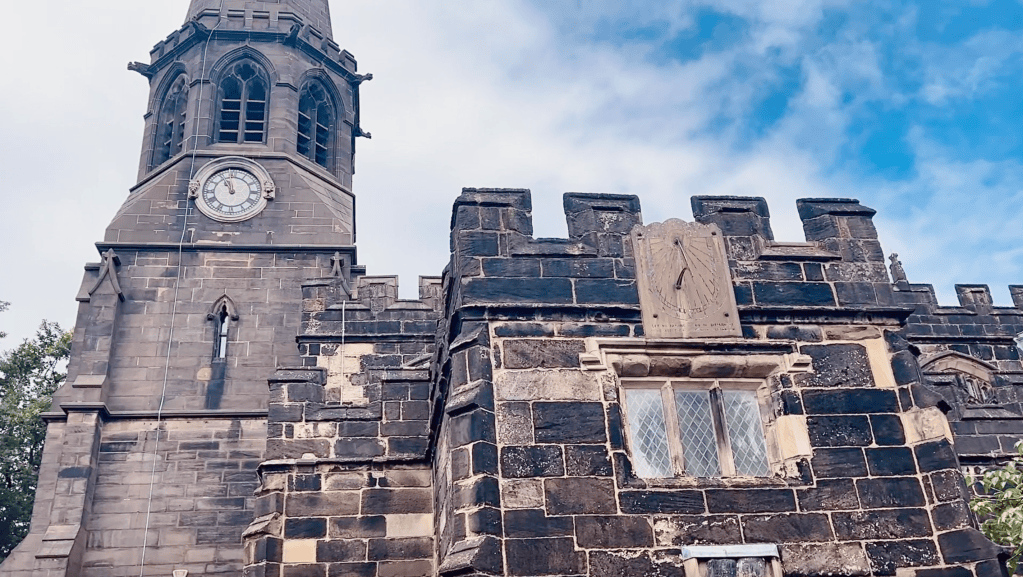
“It’s an incredible building. It’s worth coming off the motorway, doing a quick diversion and discovering us. Here we have one of the finest examples of Elizabethan ceilings in the country,” says Rev Andrew Holliday, rector of St Wilfrid’s Church.
Surrounded by large trees, the church sits beneath the rhythmic flapping of St George’s flag hoisted at its main entrance.
Rev Andrew Holliday: “It is from here that the community of Standish has evolved and it remains a hub to this very day.“
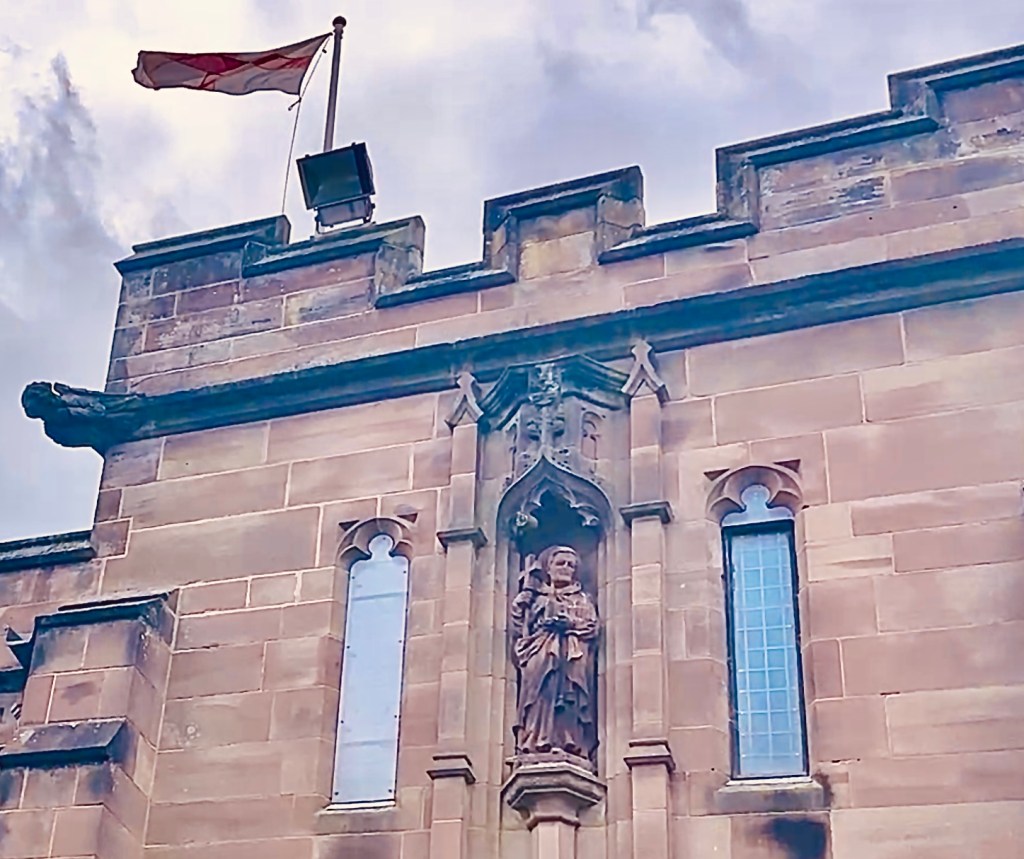
A church has stood on the site since at least 1205, although the present building was largely rebuilt between 1582 and 1584.
The Peace Gate at the forefront of the church was built to commemorate the end of the First World War, with its architecture designed in keeping with the main 1580s building.
The manicured lawn and gardens are dotted with gravestones dating back to the seventeenth century.
St Wilfrid’s also features rare, pointed nave and chancel arches resting on Tuscan columns, considered to be the first of their kind in England.
The church had only recently emerged from another major restoration challenge.
A £500,000 project to restore its 130-foot spire was completed last year after structural surveys identified cracks in the Victorian stonework, with corroded ironwork and water damage affecting the structure.
The restoration was supported by parish funds, grants and community fundraising, including the “Save Standish Spire” campaign.
But during the work, closer inspection of the church revealed another, potentially much larger problem.
Once inside, the church’s architecture immediately draws attention. A blend of late Gothic and Renaissance styles, its richly carved interior features moulded roof beams, armorial tie beams, a 17th-century communion rail and a 1616 pulpit.
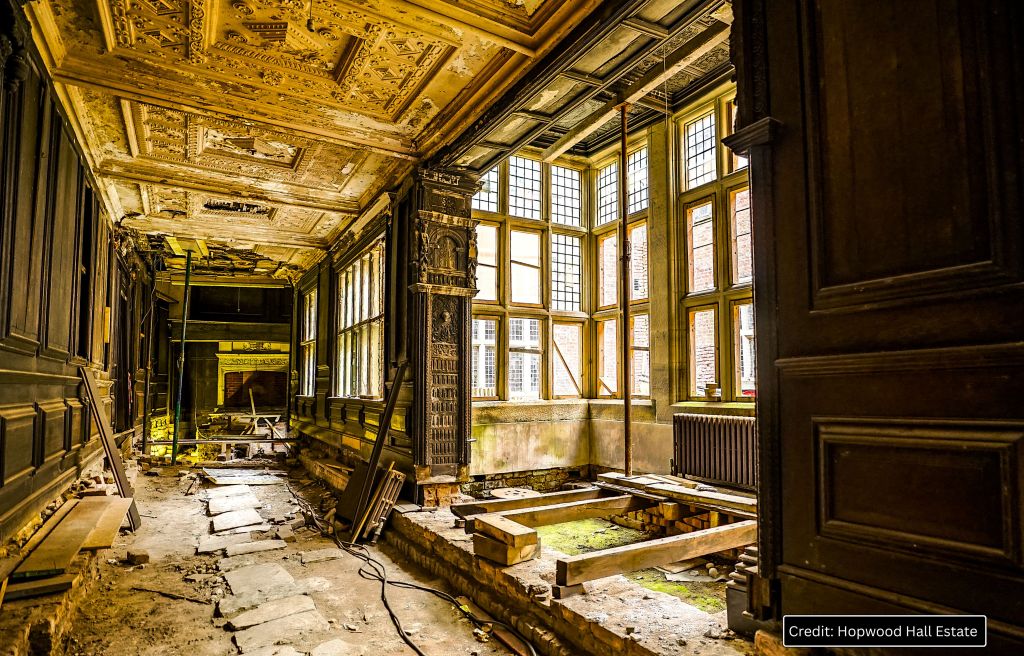
Most striking is the Elizabethan ceiling. Lofty as it is, the oak-timbered ceiling adds to the sense of timelessness within the church.
“As we began the restoration of the spire, we discovered that the Elizabethan ceiling was showing signs that something was wrong. We didn’t quite know what was going on,” Rev Holliday said.
“So, we put up a section of scaffolding to do a deep investigation of the timbers. And what we discovered was an infestation of deathwatch beetles.”
Mark Atherton, director of environment at the Greater Manchester Combined Authority, said damp conditions can make timber more vulnerable to infestation.
“Deathwatch beetles can be found in moist conditions, so they tend to get into divots or scratches in the wood, and they lay their larvae and then the larvae can destroy the wood from within.
“You can treat them by injecting the wood, but the way to prevent them is to stop the wood getting damp in the first place,” Atherton said.
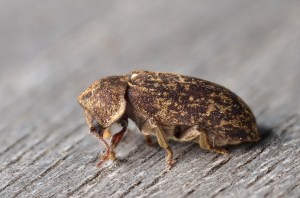
The deathwatch beetle (Xestobium rufovillosum) is a wood-boring insect whose larvae feed on timber, particularly in damp conditions. The species gets its name from the tapping sound produced by males, historically associated with the quiet of a sickroom during a deathwatch, according to the Woodland Trust.
What followed was an urgent and extensive inspection, section by section, of the entire ceiling.
Its intricate moulded design divides the roof into several bays, each containing 18 squares arranged in diagonal patterns. Each intersection of the diagonal ribs features a different carved boss, contributing to what is regarded as one of the finest examples of Elizabethan architectural craftsmanship in the country. One of the bosses, directly above the altar, depicts a grinning face with its tongue out.
Currently, some 31 props are supporting the Elizabethan ceiling and roof, rendering the chancel area unusable.
“Some rearrangements had to be made in the church, but we’re maintaining that so that we can worship Sunday by Sunday,” Rev Holliday said.
“One interesting thing we have discovered about deathwatch beetles is that once they have infested the timber, they very rarely come back out of it. So what you need to do is establish where the timber has been infected. The larvae actually munch away quite happily and very rarely do they actually take flight. You don’t actually see any vast disturbance of the timber.”
Some surface treatments have been carried out to minimise the risk posed by the deathwatch beetle. But the actual treatment and eradication of the infestation is going to be a considerable project, according to the Rector.
“We don’t exactly know the estimate of the cost, as we have not launched the project yet. But we’re probably thinking about somewhere around £4.7 million.”
The church is now in the process of making an application to the National Lottery Heritage Fund and expects to hear a decision towards the end of this year.
“To the government, I’d want to say, can we revisit the Listed Places of Worship scheme? But those who know me will probably say ‘we’re not surprised that Andrew has mentioned that.’”
Notably, the Government has replaced the former Listed Places of Worship Grant Scheme with the £92 million Places of Worship Renewal Fund, which will provide competitive grants to listed places of worship in England over four years.
Rev Holliday highlighted that “this church is not just a place to gather for worship,” nor is its sole significance in its history alone but is much deeper and goes beyond.
“What’s the appropriateness of this building in our generation is that this church is not a place just simply to gather for worship,
Rev Andrew Holliday
as beautiful as that is.
It’s also a place in which we’re reaching out to serve the community in lots of different ways.”
“But the community responded in great faithfulness as well, not only in supporting us in our fundraising efforts, but also in being very generous both in their time and financially as well.”
St Wilfrid’s community outreach indeed extends beyond worship. Its parish hall hosts community groups, while weekly winter lunches provide food and a safe space for people to meet. It also hosts Alcoholics Anonymous, a monthly bereavement group and a support group for people experiencing drug addiction.



Leave a comment